If your emotional abilities aren’t in hand, if you don’t have self–awareness, if you are not able to manage your distressing emotions, if you can’t have empathy and have effective relationships, then no matter how smart you are, you are not going to get very far.
—Daniel Goleman
“Intelligence is the aggregate capacity of the individual to act purposefully, to think rationally, and to deal effectively with his environment” David Wechsler. However, we now know that intelligence in its entirety is multifaceted.
Typically, testing intelligence involves a series of standardized tests. These are administered and scored, and the test-taker receives a score that supposedly is meant to be their level of intelligence. Do you see what is unfair with this scenario? Are you merely a score? No, I didn’t think so! Is…there more to you than what can be measured on a test?
Yes, of course. Welcome emotional intelligence (EI)!
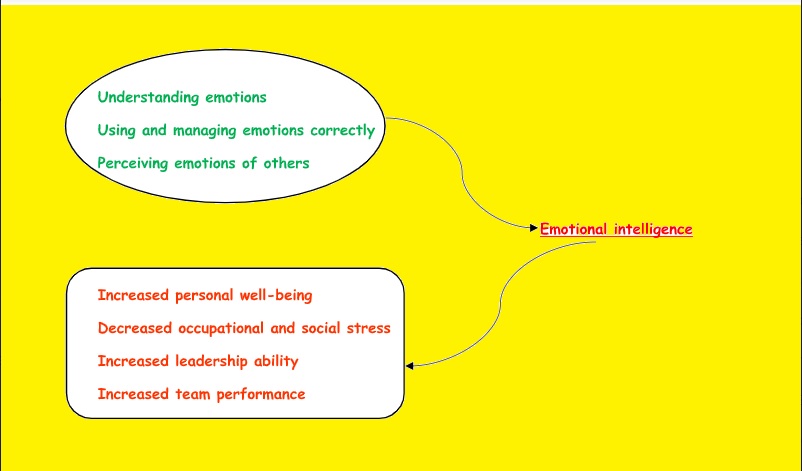
Recently receiving increased attention, EI is the ability to perceive and understand one’s own emotions and the emotions of others, as well as being able to use that information to successfully navigate situations and tasks that involve problem solving.
Wow! Right? Just imagine a world with more people that are emotionally intelligent. Aah, just picture the improved interpersonal skills, appreciation of diversity, understanding each other, empathy, care, better leaders, conflict resolution, world peace! That’s right! 😊
Generally, the term ‘emotion’ has a negative ring to it. “Oh, he’s too emotional” or “oh, she’s just being a cry baby…too sensitive”. Let us differentiate. Not being able to regulate your feelings and acting inappropriately is, in fact, a lack of EI.
Take the following scenario for example:
Man A walks into a coffee shop and orders his favourite cappuccino, he sits down with his dear old friend, Man B, who refused to order anything, insisting that he didn’t want a drink. Lo and behold, Man B then proceeds to drink Man A’s beloved cappuccino! What do you think happened next? what would have been an emotionally intelligent response?
- To laugh and order another one or
- To ignore it and enjoy his friend’s company
Well, this Man A had very low EI, so… he slammed his fists on the table, shot up with rage and swore to never be friends with Man B again. It’s been 20 years, and they haven’t spoken since. ☹
Extreme? Maybe! But this is what a lack of EI would mean, short-term emotional reactions leading to long-term negative consequences.
“How do we develop EI?”. Well, I’m glad you asked. Like any new skill, you have to follow the steps from unconscious incompetence to unconscious competence. Basically, the following steps:
- Step 1: Accept that your emotions are valuable. Know your worth and emotions are a testament to you being alive!
- Step 2: Identify your emotional differences. What will cause you to feel a certain way? or how would this differ from you and your peers?
- Step 3: Accept the way that you feel. Don’t shy away from it.
- Step 4: Think about the cause of these emotions. Know your triggers! And then, most importantly, don’t just sit and stew in a bubbling pot, go on to:
- Step 5: Emotional management. Find what works for you. Whether it be journaling, meditation, exercise, speaking to a supportive person. (note: Journaling has the added appeal of putting distant between you and your emotions, remember you are not what you feel, but you become a culmination of your lifelong reactions to everyday and intense situations)
- Step 6: Understand and support others. Be genuine when you ask, “How are you?”
Bear in mind that to learn a new skill, you have to be motivated and consistently practice what you learn.
I mean, why let something like underdeveloped EI stop you from becoming a competent, resilient, less stressed, and altogether happier person!!
Here’s what we at SmartEd have for you!
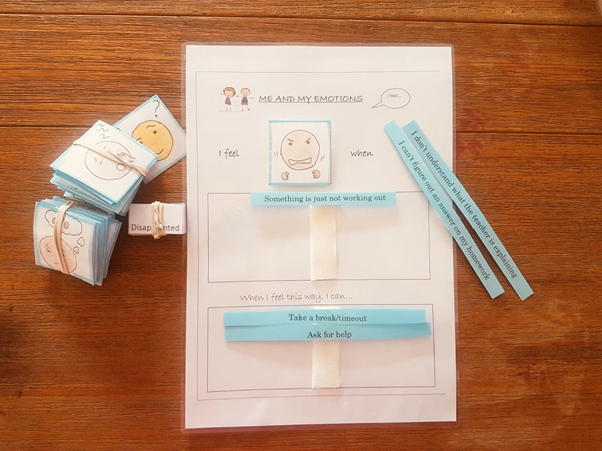
Under resources, you will find a brilliant children’s game, where we aim to teach young learners how to identify emotions and match them with suitable scenarios and appropriate coping mechanisms. Find this under “My emotions and me”
Thank you for reading.
Find us on social media or email smartedkzn@gmail.com
Yours in education
Fathima
Reference List
EI remains a fundamental dimension of being a good human being to oneself and to one another. A resourceful synopsis – thank you!
Hi Clint!
Thank you for your feedback! Appreciate it!
Stay tuned, for more interesting posts coming your way 🙂
Fathima